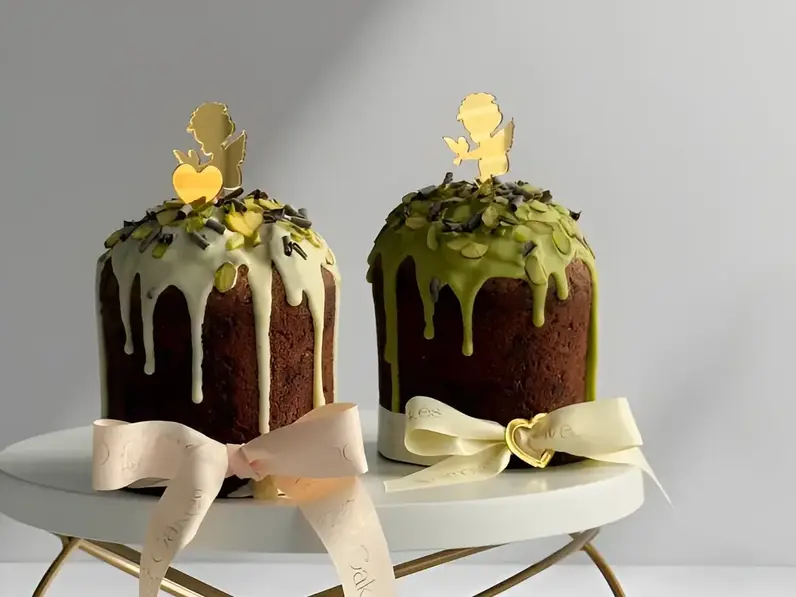
When life hands you Dubai chocolate, you make Dubai kulich—or so thought Ekaterina Abramova, a Moscow-based confectioner who decided to spice up the traditional Easter loaf with a dash of Middle Eastern opulence. What began as a whimsical experiment in January—a fusion of Orthodox tradition and Instagram-worthy ingredients—has since spiraled into a controversy hotter than a freshly baked oven. The "Dubai Kulich," stuffed with pistachio paste, kataifi dough, and the now-legendary Emirati chocolate, has become the edible equivalent of a theological Rorschach test.
The Great Kulich Schism
As orders flooded in, so did the outrage. "Fear God!" snarled one social media critic, while another prophesied doom for the priest who dared endorse it. Father David Bobrov of St. Petersburg, however, remains unshaken: "Even if the kulich is Dubai-flavored, Heaven remains Orthodox!" His defense? Innovation isn’t heresy—it’s just joy translated through pistachio-laced glaze.
Anatomy of a Scandalous Loaf
The offending confection is no ordinary bread. Imagine: a golden crust hiding layers of Dubai-style pascha (a creamy, cardamom-kissed cousin of the Russian classic), all crowned with chocolate shards and emerald pistachio petals. It’s less "blessed bread" and more "dessert worthy of a sheikh’s brunch"—which, incidentally, Father David joked might attract actual sheikhs to next year’s Easter service.
A Brief History of Kulich Anarchy
Purists fume, but tradition has always been fluid:
- 18th century: Polish "rum babas" smuggled into Russia, inspiring boozy, saffron-laced kulichi.
- 1898: Pyotr Andreev’s cross-shaped masterpiece with almond flour and fresh milk.
- Soviet era: Factory molds standardized the shape—borrowed unceremoniously from those very babas.
So much for "eternal" tradition.
The Real Sin? Missing the Point
As keyboard warriors duel over canonical correctness, Saint Seraphim of Sarov’s advice echoes: "Don’t eat people during Lent." Or, as Matrona of Moscow put it: every sheep hangs by its own tail. Translation? Judge your neighbor’s kulich less, and maybe savor the irony—after all, isn’t Easter about renewal? Even if it’s garnished with Dubai gold dust.